April 21.2026

When the Office Goes Remote, What Happens to Construction Projects?
Malaysia’s recent implementation of work-from-home (WFH) arrangements for eligible civil servants marks a shift toward more flexible and distributed working environments across key administrative regions, including Putrajaya, Kuala Lumpur, Selangor, and selected state capitals.
While public services continue to operate, this transition changes how government agencies function—moving from physically coordinated workflows to more decentralized, system-dependent operations.
For most sectors, this shift can be managed with minimal disruption.
However, for the construction industry—where projects depend heavily on timely approvals, coordination, and continuous interaction with government stakeholders—the impact is more immediate.
As physical presence decreases, coordination becomes less immediate, less visible, and increasingly dependent on system efficiency.
Why This Challenge Is Not New—But Now More Visible
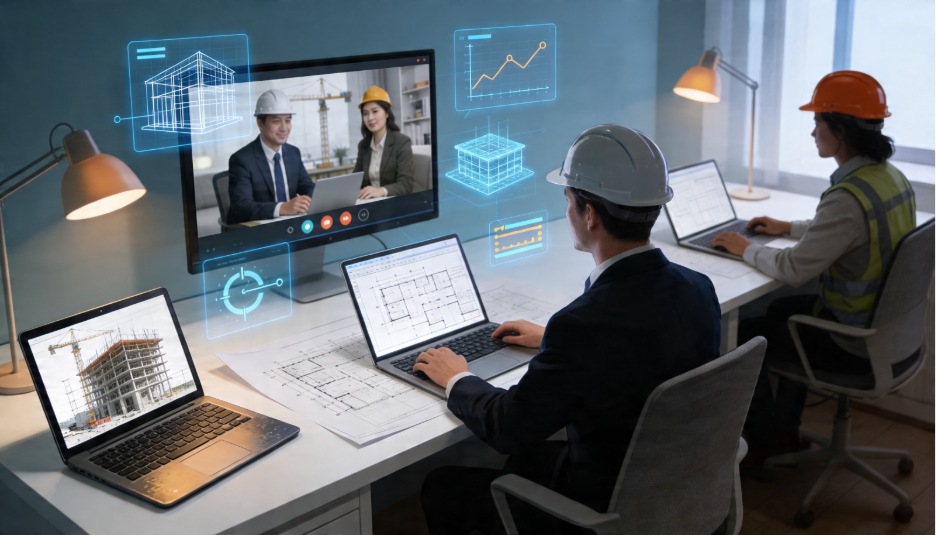
This shift does not introduce new problems. Instead, it exposes existing limitations within the industry.
Construction workflows have long been fragmented and dependent on physical coordination.
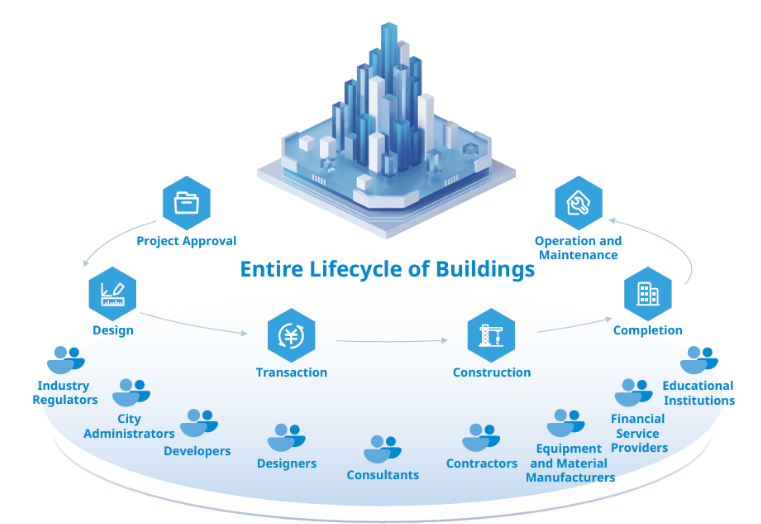
Across the construction lifecycle—from design → costing → project management → facility management—processes are often not fully integrated.
As a result:
-
-
- Information is scattered across multiple platforms
- Manual processes are used for approvals, measurement, and tracking
- Integration between stakeholders is limited
- Real-time visibility and data consistency are lacking
-
Under normal conditions, these inefficiencies may be absorbed through physical coordination.
But in a remote or hybrid environment, they become critical bottlenecks that directly impact productivity and project delivery.
This Is Where Digitalization Becomes Essential
Because the challenge is structural—not temporary—the solution must also be structural.
This is where digitalization moves from “nice to have” to “must have.”
To operate effectively in a distributed environment, construction stakeholders require:
-
- Centralized access to project information
- Real-time collaboration across organizations
- Consistent and traceable workflows
- Integration across project stages
With cloud-based and integrated solutions like Digital Quantity Surveying (QTO & costing) , Common Data Environments (CDE) Integrated project collaboration platforms , teams are able to:
-
- Access project data anytime, anywhere
- Work from a single, updated source of truth
- Track progress, issues, and approvals in real time
- Maintain consistency across documentation
In a connected environment, productivity is no longer tied to location—but to system integration.

Aligned with Malaysia’s Digitalization Agenda
Importantly, this shift toward digitalization is not reactive—it has already been defined at a national level.
Over the years, Malaysia has actively driven the construction industry toward digitalization, guided by initiatives such as:
-
- National Construction Policy 2030
- Malaysia Digital Economy Blueprint (MyDIGITAL)
- CIDB’s Construction 4.0 Strategic Plan
These frameworks emphasize:
-
- Digitalization of construction workflows
- Improved productivity and efficiency
- Greater integration across the construction lifecycle
- Development of a more resilient and future-ready industry
The current environment does not change this direction—it accelerates its importance.
What was once a long-term ambition has now become an immediate operational priority.
Turning Direction into Real Industry Practice
To support this transition, industry efforts are increasingly focused on practical implementation.
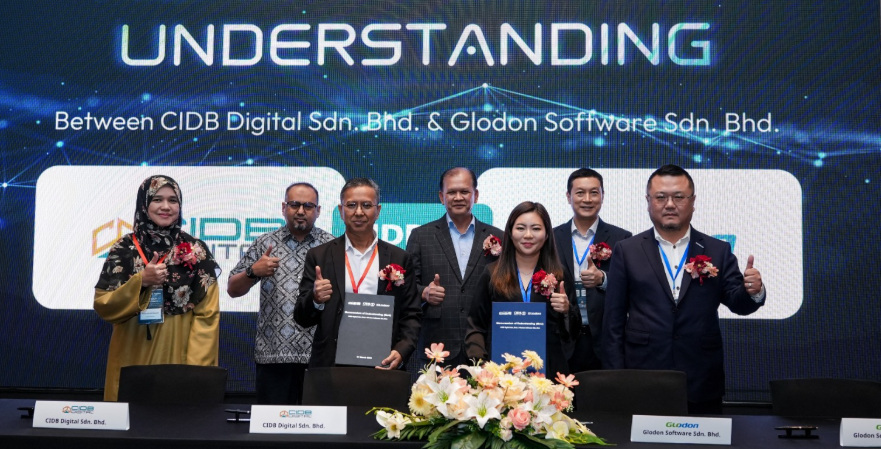
In March, Glodon Malaysia and CIDB Digital formalized a strategic collaboration through an MoU signing ceremony, reflecting a shared commitment to advancing Malaysia’s digital construction ecosystem.
The focus extends beyond strategy to real-world application, including:
-
- Advancing end-to-end digital workflows across the construction lifecycle
- Enabling better integration from design to costing to project delivery
- Supporting on-the-job training, allowing teams to gain hands-on experience with digital tools
This reflects a broader industry shift:
From digitalization as a concept → to digitalization as daily practice
Building Awareness Where It Matters
To support this transition, awareness and capability development are essential.
Adoption requires more than tools—it requires understanding, exposure, and confidence.
Glodon Malaysia continues to engage stakeholders across the construction ecosystem—including contractors, consultants, developers, and project teams—through a range of industry engagement initiatives and collaborative programs.
Upcoming engagements include:
-
- Keynote Speaker at the “Seminar Profesion Juruukur di Malaysia” by RISM Kelantan on 20 April, sharing insights on “Start Smart: A QS Guide to AI and Essential Digital Tips.”
- Next-Gen QS Practice Workshop in collaboration with CIDB on 23 April, guiding quantity surveyors through digital workflows and building the foundation for AI-driven QS practices
- Contractor Project Management Seminar with MBAM (May), featuring interactive demos, talk show sessions, and benchmark client success sharing
By providing hands-on exposure to digital workflows, these initiatives help industry professionals understand how digitalization can be applied within real project environments.
Looking Ahead
The shift toward flexible working is not just a temporary adjustment—it signals how the industry must evolve.
As projects become more complex and working environments more dynamic, the ability to connect people, data, and processes will define the next phase of construction.
For Malaysia’s construction sector, the question is no longer:
“Should we digitalize?”
But:
“How quickly can we adapt?